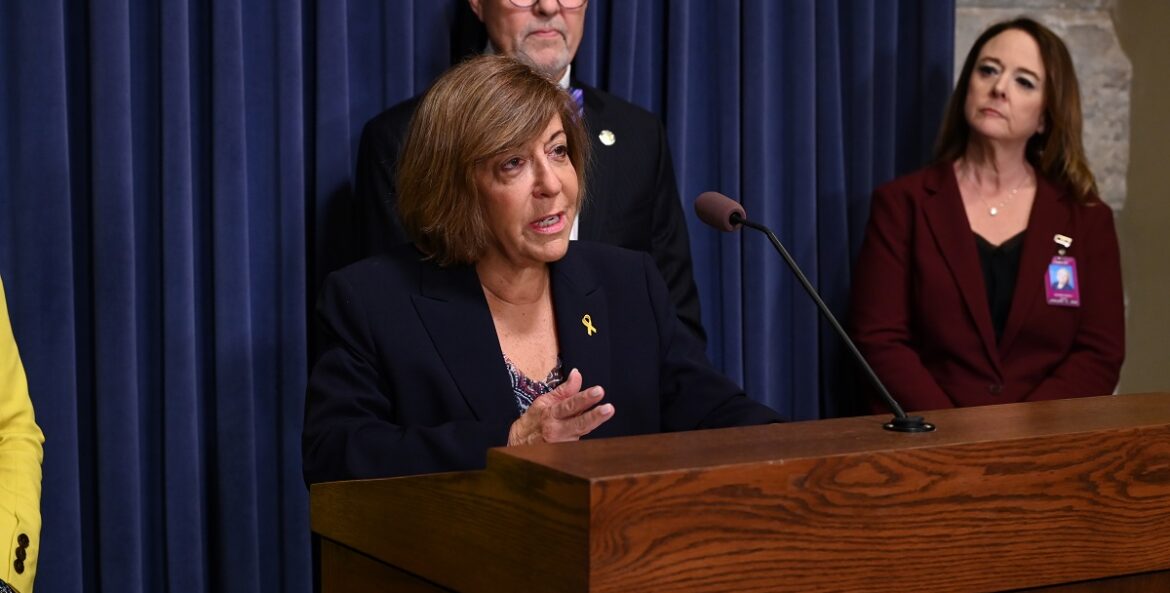
After property at the southwest corner of Diversey Parkway and Seminary Avenue, in a residential Lakeview neighborhood, was purchased by ComEd and proposed as a site for a planned electrical substation, State Senator Sara Feigenholtz and State Representative Ann Williams sent a letter urging the company to rethink the parcel and gather input from local residents before moving forward.
“This location is a densely populated residential neighborhood close to schools and daycare centers. The ADA-Accessible Diversey CTA station makes this prime for transit-oriented residential development, not just commercial use,” said Feigenholtz (D-Chicago). “We know that grid capacity is important, but we also echo the many Lakeview residents who have clearly and consistently raised concerns about the adverse effect this project could have on our neighborhood.”
The one-acre property, located at 1111 W. Diversey Pkwy., once housed a car dealership and then became a drive-through COVID-19 testing facility. The community recently learned it was purchased by ComEd with an eye toward building an electrical substation to increase capacity in a neighborhood that abuts a densely populated residential community within a transit-oriented hub.
Transit-oriented development is a planning strategy that creates dense, walkable, mixed-use communities centered around high-quality public transportation. Chicago’s Connected Communities Ordinance names TOD as a development policy priority, aiming to foster sustainable, vibrant neighborhoods.
On Friday, Feigenholtz and Williams sent a letter to ComEd expressing concerns about the proposal and urging the company, as a community partner, to engage in productive dialogue with residents, alderpersons, and legislators regarding this project.
Feigenholtz’s letter follows a formal request for the site’s zoning specifications from Aldermen Timmy Knudsen, Bennett Lawson, and Scott Waguespack to the city’s zoning administrator. The City Council members asked the city to clarify whether the proposed electrical substation truly qualifies as a “minor utility” as is currently classified.
Because of the proposal’s “minor utility” categorization, there is no requirement for a public hearing. Feigenholtz supports the local aldermen’s effort to appeal the classification from “minor” to “major” utility and urges the company to take further steps to gather community input during the planning process.
“With fewer and fewer residential development options, my community is rightfully concerned about this plan,” said Williams (D-Chicago). “ComEd is a community partner. Instead of taking a large, developable site off the table from residential or mixed use, let’s put residents at the table and bring these meaningful discussions to the forefront.”
“Property that is located in the walkshed of public transportation – specifically fixed guideway rail – is considered hallowed ground for mixed-use transit-oriented development,” said Michael McLean, a resident and community organizer with Lakeview Urbanists.
Senator Feigenholtz is committed to elevating her community’s concerns. She will continue to work alongside Representative Williams and North Side aldermen to obtain answers, advocate on residents’ behalf, and ensure the neighborhood remains protected.